
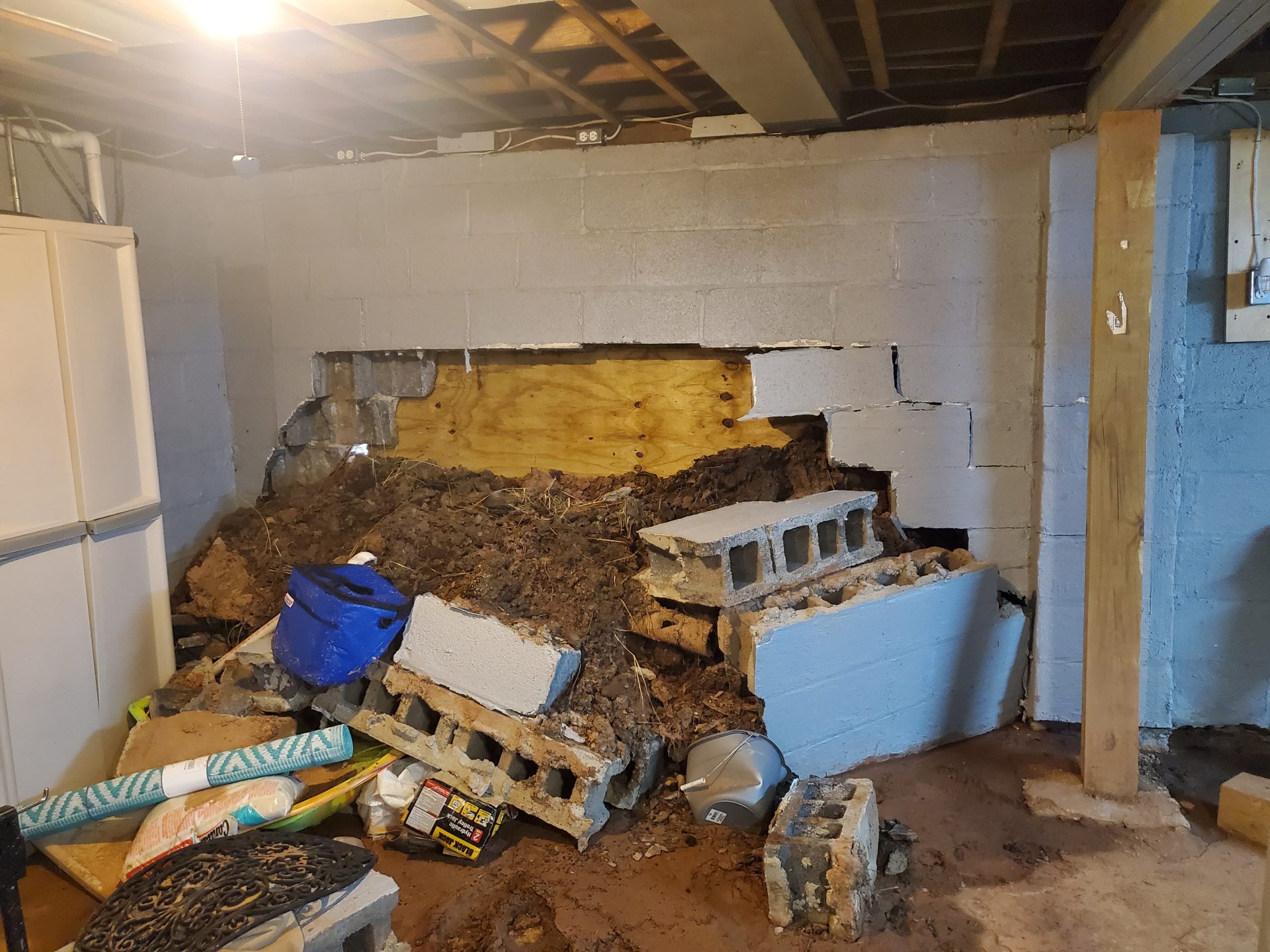
In the Tri-State area, we often think the worst of winter is over once the snow shovels go back into the garage. But for your building’s foundation, the real challenge is just beginning. As March turns to April, the rapid swing between 40°F days and 20°F nights creates a violent cycle that can do more damage to concrete and masonry than a single blizzard ever could.
Table of Contents
The Physics of the Thaw: Hydrostatic Pressure
As spring rains arrive and snow melts, all that water saturates the soil and finds itself with nowhere to go. Instead of draining through the ground, all the heavy water sits directly against your foundation.
This leads to Hydrostatic Pressure: hundreds of pounds of force pushing against your basement or crawlspace walls.
- The Result: If your drainage is insufficient, this pressure can cause foundation walls to bow inward or create new horizontal cracks.
- The Warning Sign: If you see water seeping through the floor-wall joint (the cove joint) after a big thaw or rain, the pressure is reaching a critical point.
The Salt Scour and Concrete Spalling
If you own a facility where you used rock salt to keep your walkways or parking structures clear this winter, your concrete might be paying the price.
When salt lowers the freezing point of water, it allows more liquid to seep into the microscopic pores of the concrete. When that water eventually re-freezes at night, it expands by about 9%, literally popping the surface of the concrete off. This is known as spalling.
Sabio Engineering Services warns property managers to look for:
- Exposed Rebar: Once the concrete flakes away, the steel reinforcement inside is exposed to air and moisture.
- Rust Expansion: Rusted steel expands up to 5x its original size, which cracks the concrete from the inside out. This is a primary cause of structural failure in multi-story parking decks.
Foundation Heaving: The Ground is Moving
In areas with clay-heavy soil, which is common in many parts of Northern NJ and Westchester, the frost heave can actually lift entire sections of a building. As the ground thaws unevenly in the spring, the building settles back down, but rarely into its original position.
Check your property for these Spring Shifts:
- The Sticky Door: Doors that worked fine in December but now rub against the frame.
- The Stair-Step Crack: Diagonal cracks in exterior brickwork that seem to have grown since last fall.
- Gaps in Trim: Crown molding or baseboards that have pulled away from the wall.
Don’t Let a Maintenance Task Become a Structural Failure
Most thaw issues start as simple drainage problems. If your gutters are dumping water right at the base of your foundation, you are feeding the hydrostatic pressure that leads to structural cracks.
At Sabio Engineering Services, we perform Structural Assessments for homeowners, landlords, and industrial facility managers. We don’t just look at the crack; we look at the grading, the drainage, and the soil to stop the cycle of damage before next winter hits. Is your building showing signs of a Freeze-Thaw Hangover? Contact Sabio Engineering Services at (929) 381-0030 or info@sabioengineering.com to perform a structural assessment to identify issues that Spring has revealed and design cost-effective repairs.