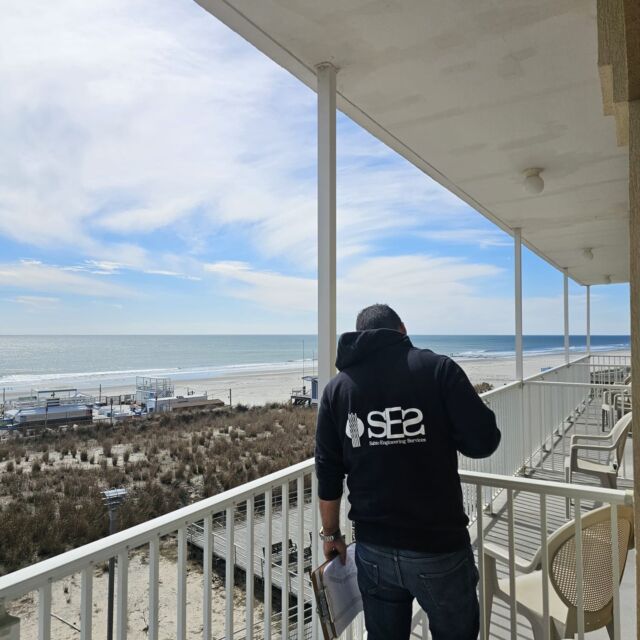
Building or renovating along the Jersey Shore has always required a high degree of resilience, but January 2026, marked a turning point for every coastal property owner. The New Jersey Department of Environmental Protection (NJDEP) officially adopted the REAL (Resilient Environments and Landscapes) rules, a major update to the state’s flood hazard regulations.
At Sabio Engineering Services, we help clients navigate these new standards to ensure their projects aren’t just legal, but built to withstand the next century of coastal reality.
Table of Contents
The New Standard: Plus 4 Feet
The most significant change under the NJ PACT/REAL initiative is the elevation requirement. For new construction and substantial improvements, NJ now requires the lowest floor to be built 4 feet above the FEMA Base Flood Elevation (BFE). This isn’t an arbitraty safety margin; it’s based on the Climate Adjusted Flood Elevation (CAFÉ), which anticipates sea-level rise through the year 2100. Whether you are in Cape May, Belmar, or Jersey City, these rules fundamentally change the math of your structural design.
Understanding Your Zone: V-Zones vs. Coastal A-Zones
Structural engineering requirements differ wildly depending on how the water hits your building.
- V-Zones (Velocity Zones): These are high-hazard areas subject to wave action higher than 3 feet. Here, buildings must be elevated on open foundations (piles or columns) so the waves pass underneath without slamming into a solid wall.
- Coastal A-Zones (CAZ): These areas face smaller waves (1.5 to 3 feet) but still require specialized foundations. Since 2025/2026, many areas previously considered standard flood zones are now being treated with the same structural rigor as V-Zones.
How We Engineer for Compliance
At Sabio Engineering Services, we don’t just lift houses; we design structural systems that resist the effects of a storm surge:
- Helical Piles & Deep Foundations: In sandy coastal soils, traditional footings often fail. We specify helical piles or deep timber piles that reach stable soil strata to prevent scour from undermining your home.
- Breakaway Walls: For enclosed areas below the flood elevation (like garages), we design breakaway sections. These walls are engineered to fail under a specific amount of water pressure, allowing the flood to flow through without compromising the main structural columns.
- Corrosion-Resistant Detailing: Coastal air is brutal. We specify high-grade galvanized or stainless-steel connectors to ensure your building’s joints don’t rust away in the salt air.
Why You Need a Structural Engineer’s Stamp
In the state of New Jersey, flood zone construction requires a V-Zone Design Certificate or a specialized Elevation Certificate signed by a Professional Engineer (P.E.).
Beyond the permit, a properly engineered building with structural designs from Sabio Engineering Services can lower your NFIP (National Flood Insurance Program) premiums. By building to the new +4ft standard and using the correct FEMA-compliant materials, you protect your family and your long-term investment.
Ready to Start Your Coastal Project?
Navigating the 2026 REAL rules can be overwhelming, but you don’t have to do it alone. Whether you’re a homeowner looking to elevate or a landlord planning a multi-family mid-rise near the water, Sabio Engineering Services has the local expertise to get your plans approved. Give us a call at (929) 381-0030 or send an email to info@sabioengineering.com so we can help you further.