
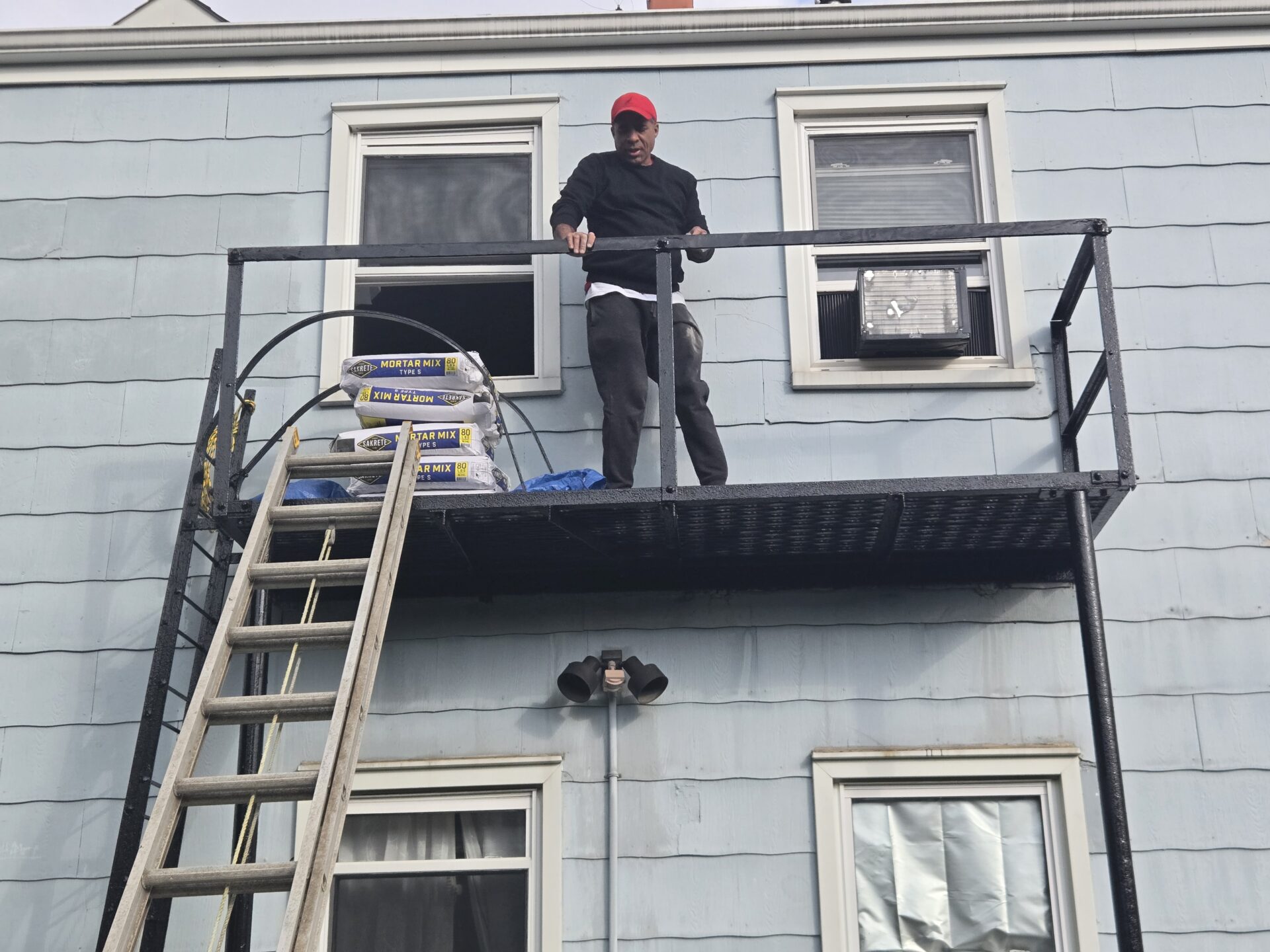
Winter in the NJ/NYC area is a battle of endurance for building exteriors. Between the salt spray, the heavy snow loads, and the relentless freeze-thaw cycles, your building’s facade and the surrounding structures takes a beating.
As the weather warms, many property owners find themselves facing a Spring structural checklist that is no longer optional. At Sabio Engineering Services, we are seeing an influx of calls regarding leaning walls, crumbling brick, and concerns with fire escape safety.
Table of Contents
1. Facades: The Danger of Oxide Jacking
Your building’s facade does more than provide curb appeal; it’s a protective barrier. During the winter, moisture seeps into the mortar joints. When it freezes, it expands, hairline cracks become gaps, and the cycle accelerates.
A specific concern we see in older buildings is oxide jacking.
- The Process: Water reaches the steel lintels (the beams over your windows and doors).
- The Reaction: As the steel rusts, it expands up to 10x its original thickness, literally lifting the brickwork above it.
- The Red Flag: If you see stepped cracks at the corners of your windows, your facade’s structural integrity is at risk.
Sabio Engineering Services provides assessments to catch these issues before they require a full-scale masonry overhaul.
2. Retaining Walls: The Pressure is Rising
Retaining walls are often the unsung heroes of NJ properties, especially on sloped lots. Winter is their worst enemy.
- Frozen Soil: Saturated soil behind a wall freezes and pushes outward with immense force.
- Clogged Weep Holes: If the drainage holes at the bottom of the wall were blocked by ice or debris, the hydrostatic pressure can cause the wall to tilt, bow, or collapse entirely during spring rains.
Pro Tip: If you notice a new lean in your retaining wall or see large cracks in the mortar, it is no longer a landscaping issue, it is a structural one.
3. The New NJ Mandate: Fire Escape Inspections
If you own a multiple dwelling in New Jersey, the rules of the game have changed. Under the recent NJ Fire Escape Inspection Regulation, owners are now strictly required to have their exterior fire escapes inspected and certified every five years.
Winter is particularly cruel to fire escapes. Salt and moisture accelerate corrosion at the connection points where the metal meets the building’s structural frame.
What the NJ law requires:
- Professional Certification: Inspections must be conducted by a licensed professional, such as a Structural Engineer.
- Structural Soundness: The engineer must certify that the fire escape can handle the required weight loads and is free from dangerous corrosion.
- Timely Filing: Failure to provide a sealed certification to the state can lead to significant fines and liability.
At Sabio Engineering Services, we specialize in these high-stakes inspections. We don’t just look at the stairs; we verify the anchors, the treads, and the overall load path to ensure your tenants are safe and you are in total compliance with the new state laws.
Don’t Wait for the Violation Notice
Spring is the time for proactive maintenance. A small repair to a retaining wall or a minor scrape-and-paint on a fire escape is significantly cheaper than a structural failure or a state-issued fine.
Whether you are managing a 2-unit rental in Hoboken or an 8-story industrial complex in Edison, Sabio Engineering Services provides the Sealed Certainty you need to move into the summer months with confidence.
Concerned about the wear that winter and spring have brought to your building? Contact Sabio Engineering Services today at (929) 381-0030 or info@sabioengineering.com to schedule an inspection.