
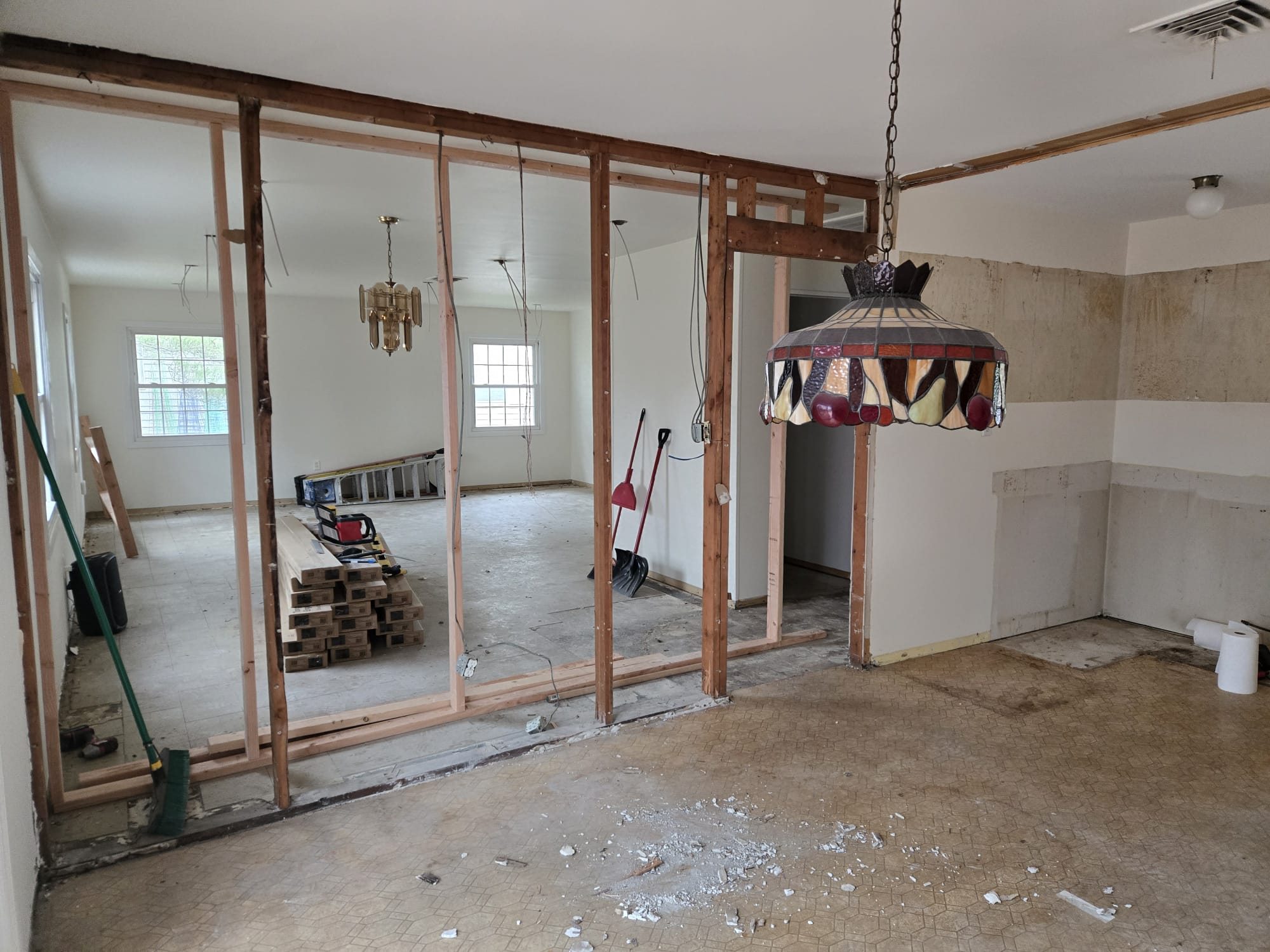
We see it on every home renovation show: a sledgehammer swings, a wall disappears, and a cramped kitchen becomes an open-concept masterpiece. In reality, that “simple” demolition can be the most dangerous and expensive change a homeowner or landlord can make without a professional plan.
While the cost of removing a wall is often calculated in labor and debris removal, the hidden costs of doing it incorrectly can haunt a property for decades. Sabio Engineering Services provides the structural expertise to ensure your renovation goes smoothly.
What Happens When a Removing Wall Goes Wrong?
A load-bearing wall isn’t just a partition; it’s vital to your building’s skeleton. It transfers the weight of the roof, the floors above, and live loads (people and furniture) down to the foundation. Removing it without a properly engineered replacement creates a structural vacuum.
- The “Slow Motion” Collapse: You might not see the ceiling fall immediately. Instead, over 6–12 months, you’ll notice doors that no longer latch, windows that won’t open, and mysterious stair-step cracks appearing in the drywall of the floors above the renovation.
- The Point Load Disaster: Many DIYers (and even some contractors) replace a wall with a beam but fail to consider where the ends of that beam rest. If those point loads aren’t supported all the way down to the foundation, you can literally crush the floor joists or crack the basement slab under the new, concentrated weight.
- The Mechanical Maze: In NJ and NYC’s older building stock, walls are rarely empty. They often house plumbing, electrical wiring, or HVAC venting. Cutting into these without a diverted plan can lead to thousands in emergency rerouting costs.
The NJ/NYC Compliance Reality: A Financial Safeguard
Beyond the physical risks, there is a significant legal and financial risk to un-engineered wall removal.
- The Resale Roadblock: When you go to sell your home in Jersey City, Montclair, or Brooklyn, a savvy home inspector will notice an unusually wide span without visible support. If there isn’t a sealed engineer’s letter and a closed building permit on file, the sale can fall through, or you may be forced to open up the finished walls at your expense to prove it was done right.
- Insurance Denials: If a structural failure occurs and the insurance company discovers the work was performed without a Professional Engineer’s (P.E.) stamp or a municipal permit, they have grounds to deny the claim entirely.
How a Structural Engineer Protects Your Investment
Hiring a structural engineer before the sledgehammer swings is the best insurance policy you can buy. Here is the guidance Sabio Engineering Services provides to ensure your open concept dream doesn’t become a structural nightmare:
- Positive Identification: We determine which walls are structural. In many NJ/NYC homes with complex framing, it isn’t always obvious.
- Precision Beam Sizing: We don’t guess. We calculate the exact tributary load to specify how to bridge the gap, whether that be with standard LVL (Laminated Veneer Lumber) or a steel beam.
- Foundation Analysis: We ensure the load path is continuous. If a post is needed in the basement to support the new beam upstairs, we design the footing to handle it.
- The Sealed Plan: We provide the signed and sealed drawings required by the local building department to secure a legal permit.
Give us a call at (929) 381-0030 or send an email to info@sabioengineering.com so we can help you develop the plan for your renovation.